
Diagnosing the ‘Leaky Bucket‘
In 2025, something didn’t quite add up at Lalit Kalyan Kendra Basic School. On paper, enrollment was rising but in reality, some students were quietly leaving. When CSN School Leaders Pawan Budhathoki and Bina Bhattarai, along with the school leadership team and teachers, took a closer look at the data, they discovered what they called the ‘Illusion of Growth’.
At first glance, the school had gained 30 new students in the academic year of 2025-26. But during the same period, 28 students had left. Growth looked real but it was fragile, like water in a bucket slowly leaking through hidden cracks. What stood out was this: while some students left due to migration or other unavoidable reasons, more than a third (36.4%) left due to issues that could have been prevented such as poor communication with parents or delayed support for students in need.
That realisation became a turning point. The focus shifted from not just prioritising enrollment but also retention: keeping students in school.
A Simple Idea: Make Attendance Visible
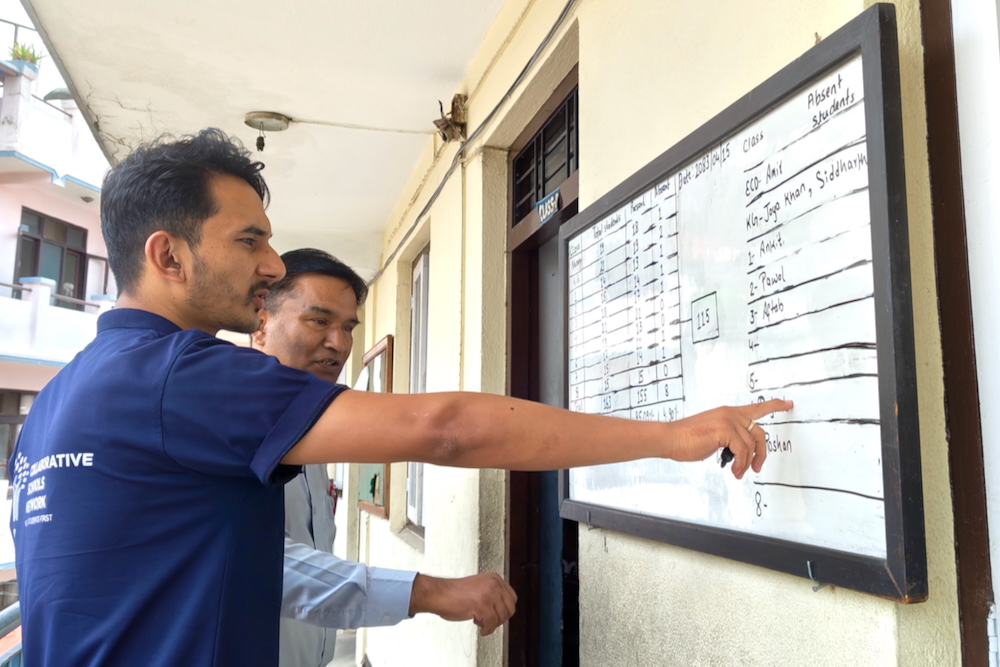
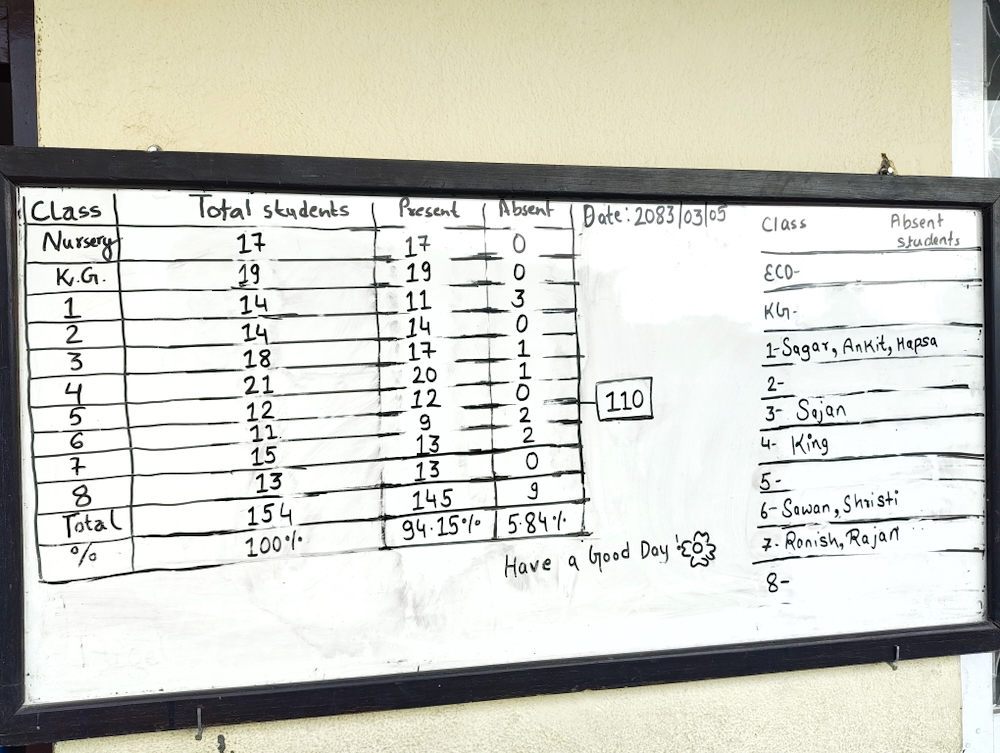
Instead of keeping attendance hidden in registers, the school introduced a simple change to make it visible to everyone. A whiteboard placed in a common area displays daily attendance for each class from Nursery to Grade 8 with the names of the students that are absent on that particular day. Every day, teachers and leaders can immediately see who is present, who is absent and what the overall picture looks like. It wasn’t a complex system but it changed how people responded, because when attendance becomes visible, it starts to become a shared responsibility.
Asking Better Questions: Who, Why, When?
From this approach, the school developed its KOS (Knowing Our Students) strategy. Instead of assumptions, teachers began focusing on three key questions:
Who is missing?
So no student is overlooked.
Why are they absent?
To understand whether it is migration, family challenges or issues the school can help solve.
When will they return?
When a student is absent, the process is immediate. A phone call home is made the same day, and if there is no response teachers conduct a home visit to understand the situation and offer support. So follow-up becomes clear, timely and purposeful.This shift helped the school intervene earlier and more effectively.
Working Together as a School
Attendance and retention are now part of everyday school discussions. Every staff meeting includes updates on student attendance and follow-up actions. Teachers work together to identify students who need support and ensure no child is left behind without attention. To encourage consistency, the school also recognises the class with the best monthly attendance during assemblies. This small appreciation has helped strengthen communication between teachers, parents and students, which directly helps in the retention of the students.
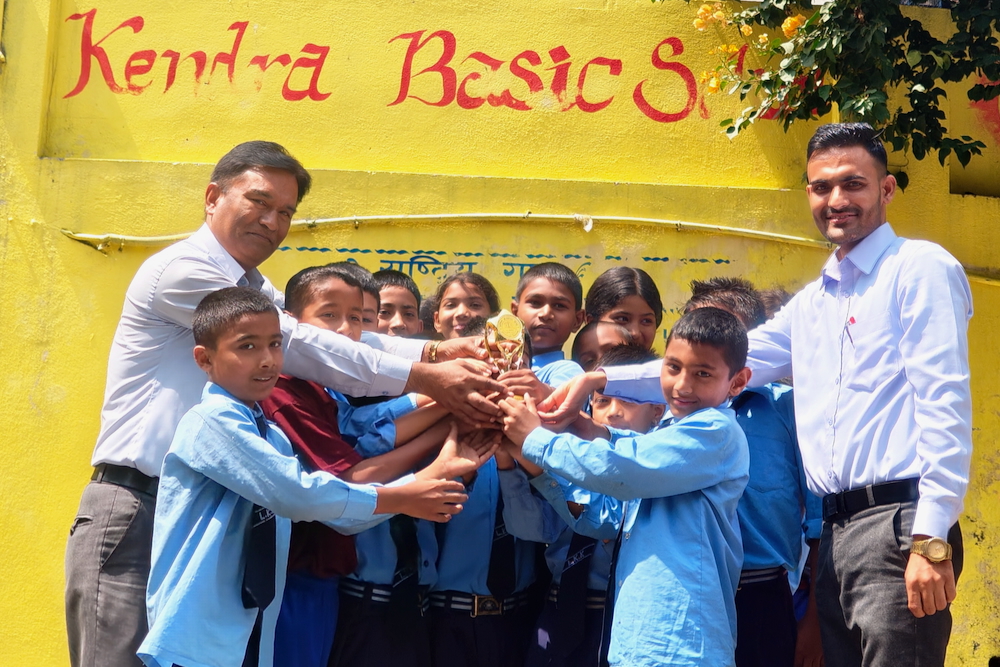
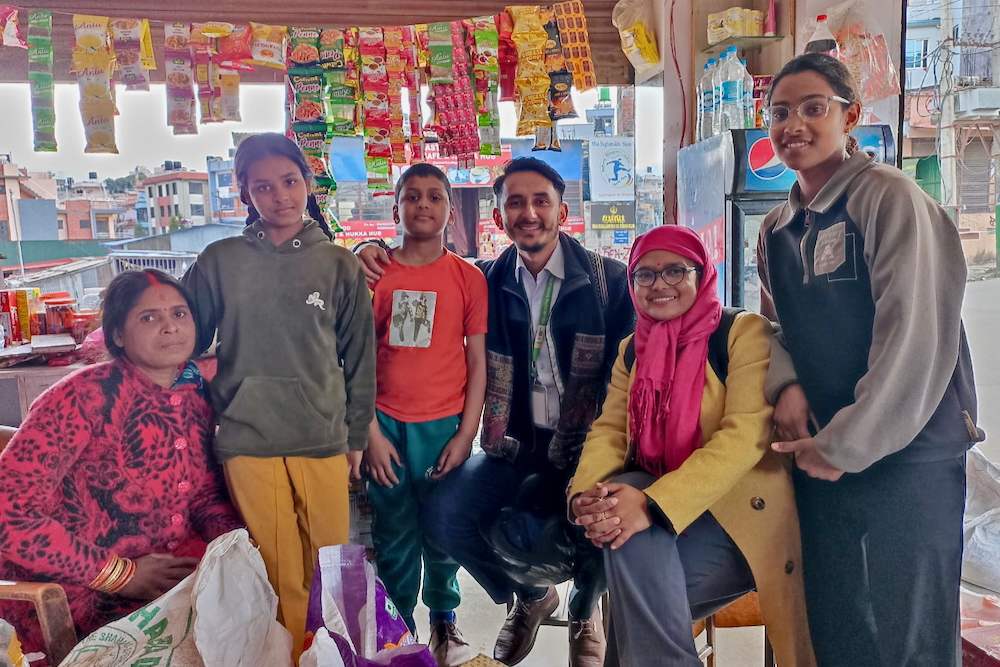
We also took this a step further by identifying students at risk of dropping out and arranging visits with their parents to discuss the reasons why they might leave. In some cases, there are factors beyond our control, for example if the family is returning to their home village, but in other cases we were able to provide support and encouragement to keep their child enrolled.
The Result: A Visible Change
Last academic year, 28 students left our school and most did so within the first three months. However, we are now into the fourth month of this academic year and only seven students have left, a reduction of 75%. In all seven cases, students have left because their parents have chosen to return to their home village; a decision which is largely beyond our control.
But beyond the numbers, the real change has been in our teachers’ mindset. Students were no longer just entries in a register, they were individuals being seen, followed up and supported.
Slowly, the ‘leaky bucket’ is beginning to hold.
Closing Thought
Sometimes, the most powerful changes don’t come from complex systems. They come from simple habits, seeing students clearly, noticing when they are missing and acting on it without delay. This is what it means to put students first.
Blog post by Pawan Budhathoki
 Collaborative Schools Network